A premium paper box is more than attractive packaging. It protects the product, communicates brand quality, and shapes a customer’s first impression before they even see what is inside. But what actually separates an ordinary box from premium packaging?
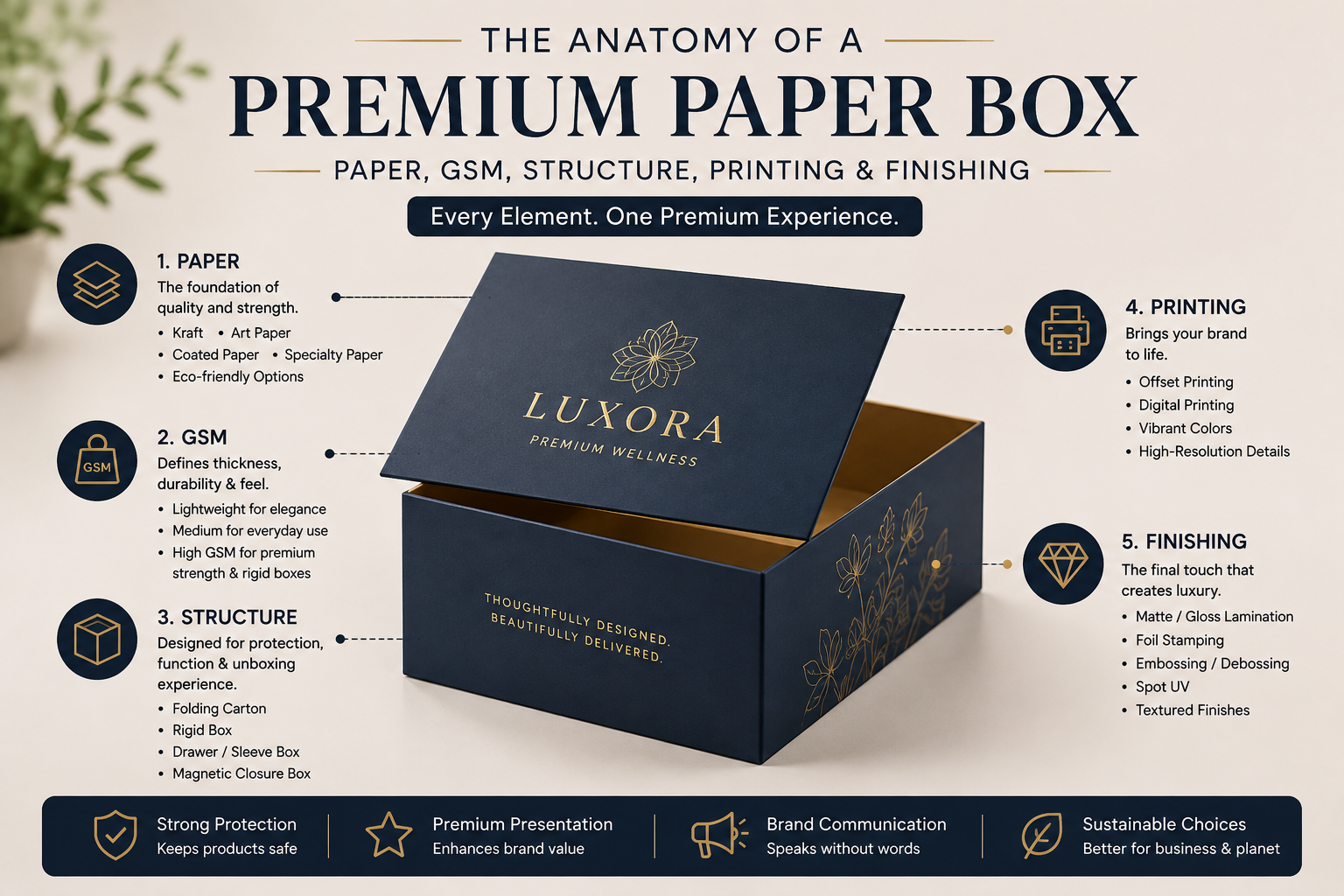
Understanding The Anatomy of a Premium Paper Box: Paper, GSM, Structure, Printing & Finishing can help businesses make smarter packaging decisions while balancing appearance, durability, functionality, and cost.
1. Paper: The Foundation of a Premium Box
The quality of a paper box begins with the material.
Depending on the product and packaging style, manufacturers may use kraft paper, coated paper, art paper, specialty textured paper, or paperboard. Luxury packaging may also combine printed paper with a thicker rigid board underneath to create a stronger structure.
The right material depends on what you’re packaging. Cosmetics, jewellery, electronics, confectionery, apparel, and corporate gifts all have different requirements.
Instead of choosing paper purely by appearance, consider its strength, print compatibility, texture, sustainability, and intended application
Understanding The Anatomy of a Premium Paper Box: Paper, GSM, Structure, Printing & Finishing can help businesses make smarter packaging decisions while balancing appearance, durability, functionality, and cost.
2. GSM: Understanding Paper Thickness
GSM stands for grams per square metre and indicates the weight of paper per unit area.
Generally, a higher GSM means a heavier and more substantial paper, although GSM alone doesn’t determine overall strength. Paper composition, stiffness, board thickness, and construction also matter.
For example, lightweight paper can work well for wrapping or inner applications, while folding cartons typically require sturdier paperboard. Premium rigid boxes may use thick board wrapped with a thinner decorative printed sheet.
This is why asking only, “Which GSM is best?” isn’t enough. The better question is: Which material and thickness are right for my product and box structure?
3. Structure: Where Beauty Meets Function
A beautiful box that doesn’t protect the product isn’t truly premium.
Structural design determines how the box opens, closes, carries weight, protects its contents, and performs during transportation.
Common options include folding cartons, rigid boxes, drawer-style boxes, magnetic closure boxes, sleeve boxes, and lid-and-base packaging.
The structure should be selected according to product dimensions, weight, fragility, presentation requirements, storage, and shipping conditions.
Good structural engineering can also reduce unnecessary material while maintaining strength.
Finishing adds the final layer of visual and tactile appeal.
Popular options include matte or gloss lamination, foil stamping, embossing, debossing, Spot UV, textured effects, and specialty coatings.
For example, gold foil can highlight a logo, embossing can create a raised tactile element, and Spot UV can introduce subtle contrast on a matte surface.
However, more finishing doesn’t automatically mean more premium.
A minimal box with excellent typography, precise printing, quality material, and one carefully chosen finish can look more luxurious than an overly decorated design.
What Makes a Paper Box Truly Premium?
Ultimately, The Anatomy of a Premium Paper Box: Paper, GSM, Structure, Printing & Finishing is about getting every layer right.
The paper creates the first tactile impression. GSM and board specifications influence durability. Structure protects and presents the product. Printing communicates brand identity, while finishing adds distinction.
When these elements are thoughtfully combined, packaging does more than hold a product—it enhances its perceived value.
For businesses investing in premium paper box packaging, the goal shouldn’t simply be to create a beautiful box. It should be to create packaging that protects the product, represents the brand, improves the unboxing experience, and gives customers something worth remembering.