Custom packaging can improve product protection, presentation and brand recognition. However, many businesses are surprised when they receive a packaging quotation. If you are wondering, “Why is your packaging cost so high?”, the answer is usually not a single feature. Box pricing depends on materials, dimensions, quantity, printing and several production decisions.
Understanding these eight factors can help you control costs without making your packaging look cheap.
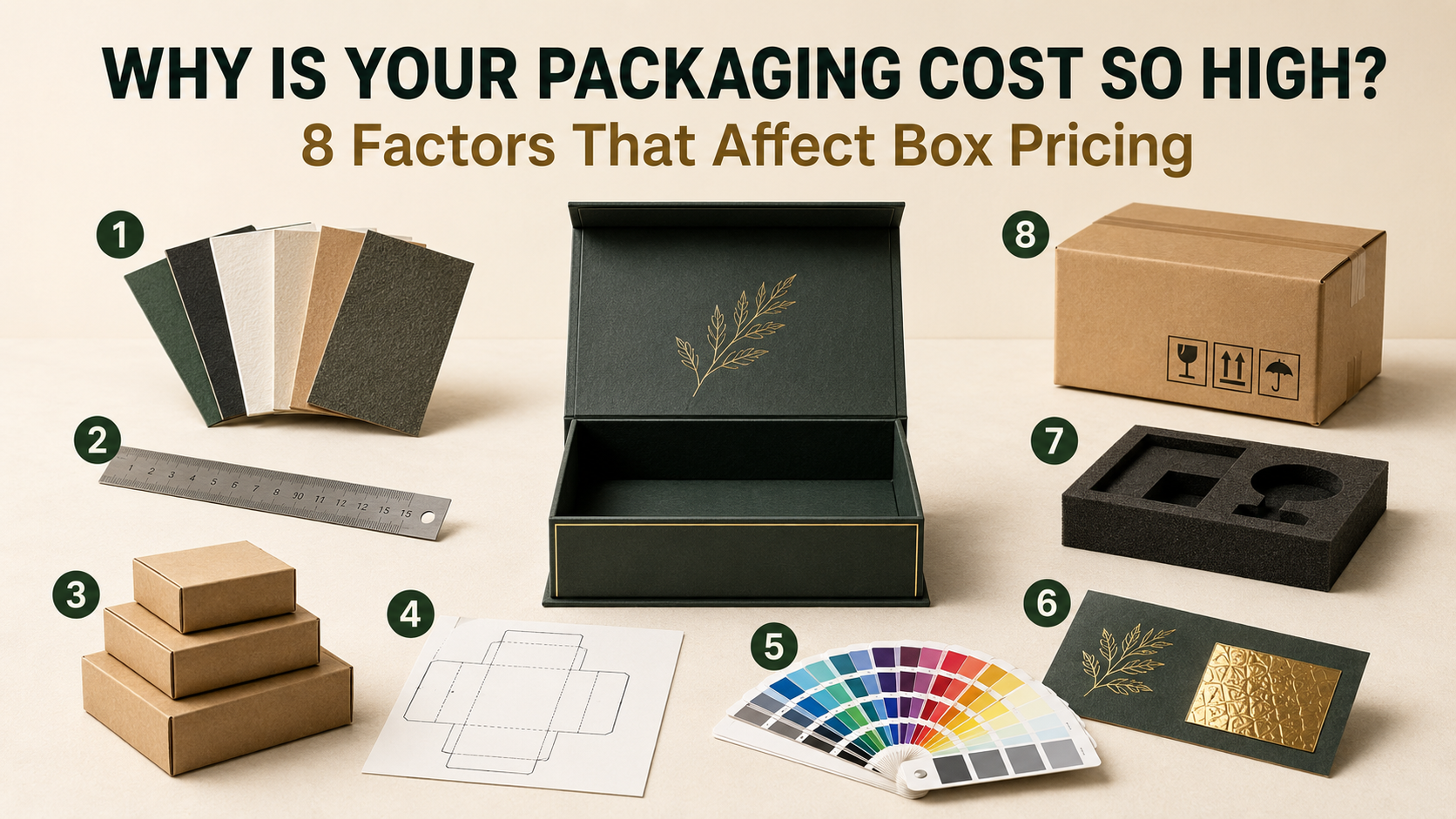
1. Type and Quality of Material
Material is one of the biggest packaging cost factors. Rigid board, corrugated sheets, kraft paper and MDF have different prices and uses. A thicker, stronger or premium-grade material costs more but may provide better protection and presentation.
Choose material based on the product’s weight, fragility and selling price rather than appearance alone.
Understanding these eight factors can help you control costs without making your packaging look cheap.
2. Box Size and Dimension
A larger box requires more material and occupies more space during storage and delivery. Unnecessary empty space can increase both packaging and shipping costs. Measuring the product accurately helps manufacturers create a better-fitting box and reduce waste.
3. Order Quantity
Small orders generally have a higher cost per box because setup expenses are divided among fewer units. Larger quantities can reduce the unit price, but ordering more than you need may create storage and cash-flow problems. Ask for quotations at multiple quantity levels before deciding.
4. Box Style and Structure
Simple folding cartons are usually more economical than magnetic rigid boxes, drawer boxes or multi-part gift boxes. Complex structures require additional materials, assembly and production time. Select a design that supports the product and customer experience without adding unnecessary components.
5. Printing Method and Number of Colours
The printing method affects the final price. Digital printing may be practical for smaller runs, while offset printing can become cost-effective for larger quantities. Multiple colours, full-surface artwork and exact colour matching may increase setup and production expenses.
6. Premium Finishing
Foil stamping, embossing, debossing, Spot UV, lamination and textured paper can make a box look luxurious. However, using several finishes together raises the packaging cost. Choose one strong finishing element that highlights your logo or key design feature.
7. Inserts and Internal Protection
Foam, cardboard partitions, moulded trays and fabric linings protect products and improve presentation. Custom inserts require accurate measurements and additional manufacturing. Use them when product safety or placement genuinely requires support.
8. Sampling, Assembly and Delivery
Prototypes, design adjustments, manual assembly, storage and transportation can affect the final quotation. Heavy rigid boxes may also cost more to ship. Confirm whether sampling, taxes, assembly and delivery are included when comparing suppliers.
How Can You Reduce Box Pricing?
Start with accurate product dimensions and request a structural sample before bulk production. Simplify the box style, avoid excessive finishing and compare unit prices at realistic order quantities. Most importantly, evaluate the total value—not only the cheapest quotation.
Effective packaging should protect the product, represent the brand and remain commercially practical. By understanding the factors that affect box pricing, businesses can make informed decisions and achieve premium results within a controlled budget.